World Fattest Muskies St John River
July 16, 2026

World’s Fattest Muskies?

Picture of Peter Levick

Peter Levick

Peter Levick is a longtime member of the Ottawa Chapter and a past National Chairman of Muskies Canada. He also serves as the Release Journal Editor and organizer of Odyssey. In recognition of his many contributions to the organization, he was inducted into the MCI Hall of Fame in 2018.

This article was originally published in Muskies Inc. magazine: MUSKIE (July-August 2026). 

It’s always a pleasure to land a fattie. We love muskies with a fat belly and big shoulders. Even though we talk about fish length as the key measure of a big fish, there’s another metric that distinguishes some fisheries from the rest. The St. John River in southern New Brunswick, Canada is one of those systems that produces really fat fish.

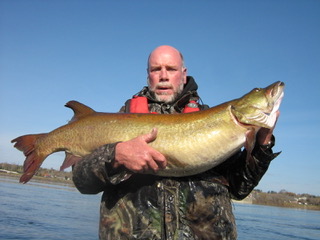
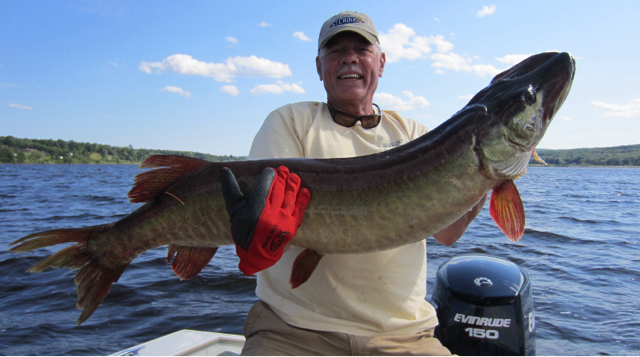
Muskies Canada St. John River Chapter past-president Steve Eldridge with a 47.25” x 25.5” fattie.

Why are these muskies so fat?

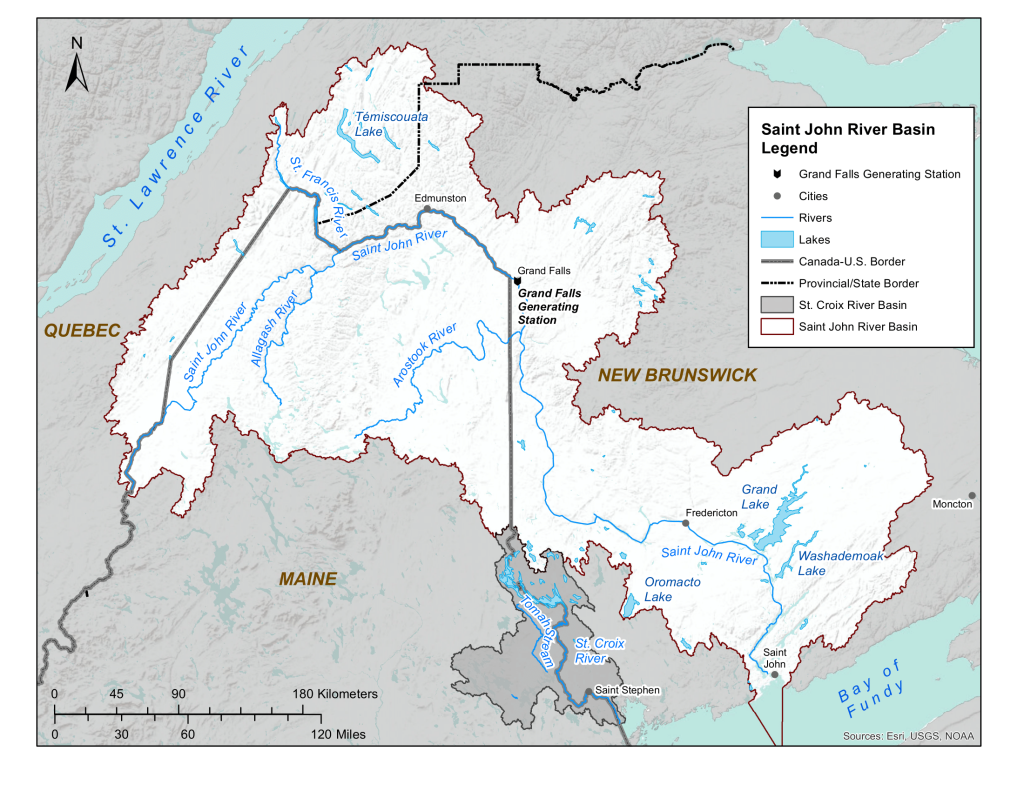
Let’s take a close look at this fishery. In the 1970s, the province of Quebec stocked a small lake (Lac Frontière) with muskellunge. This lake was near the headwaters of the St. John River watershed, and of course, fish don’t respect borders. The St. John River forms part of the border between the US and Canada, specifically between Maine and New Brunswick. Perhaps not surprisingly, muskellunge worked their way down the St. John River and were first detected in New Brunswick in the 1980s as they began to establish themselves along this 418-mile-long river system. Today, they are found all the way down to the brackish water where the river meets the Bay of Fundy on the Atlantic coast.

Over the last two decades, the St. John River chapter of Muskies Canada has been very active in the Muskies Canada log program. Chapter members have tracked these fish with over 7,000 log entries between 2007 and 2025. These logs show that the average girth of these well-fed fish often exceeds 50% of their length.

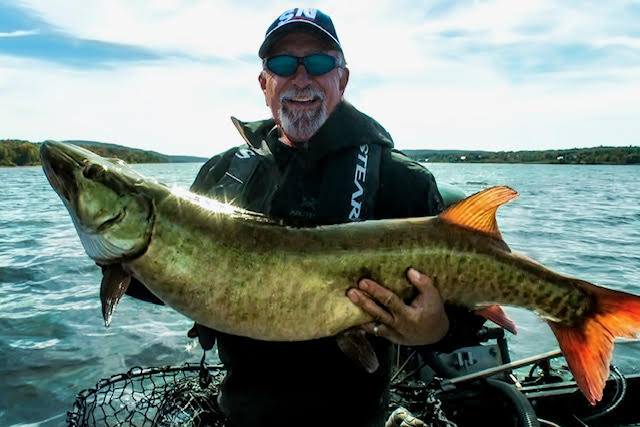
Angelo Viola, a Canadian TV personality from the popular show Fish’n Canada, with a St. John River fattie.

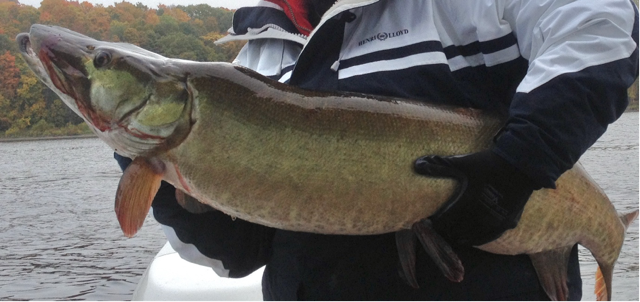
It is not unusual to see fish in all size ranges that seem to be extremely well fed and have very large girth for their length. Are these really the world’s fattest muskies? During the log study from 2007-2017, the largest fish caught was 52 x 27 inches, with a girth-to-length ratio of 0.52. Numerous other large-girth fish caught include a 45 x 25 inch fish with a girth-to- length ratio of 0.57. This phenomenon of extraordinary girth is probably due to the extremely rich food source available to this muskellunge population.

Fish with shoulders This was a 41 x 21 inch fish with thick girth and well-defined shoulders.
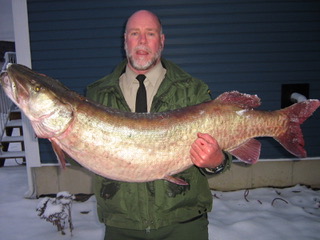
This huge muskie was found in the mid reaches of the river, and did not survive. It measured an astonishing 51 x 29.75 inches with a girth-to-length ratio of 0.58

Abundance of food

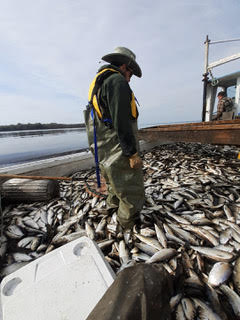
This river is full of fatty baitfish. Every year, there are millions of gaspereau (a regional term similar to “river herring” in New England to describe alewife and blueback herring) that make up an extremely rich food source for these muskies. They are so numerous that there is an established commercial fishery in the lower stretch of the river. These baitfish present an “all-you-can-eat” food source for the St. John River muskellunge, perhaps explaining the girth of the muskies that eat them. St. John River muskies have also been documented chowing down on large American shad.

Gaspereau adundance.

A newly established fishery – misunderstood in the early days:

When muskellunge first appeared along the river, this timing coincided with the decline of the Atlantic salmon fishery. Dams built in the 1950s and ‘60s disrupted the migration of salmon in the St. John River, and the population was in steep decline about the time that muskies were arriving. Initially, muskies were blamed for the decline of salmon, but further research showed that “no Atlantic Salmon smolts were confirmed in the diet of any sampled Muskellunge”. Still this was a new fishery and the regulations established by the New Brunswick Department of Natural Resources were effectively “catch and kill”. The bag limit was 5 fish per day, and the size limit was 4 inches. These regulations were put in place to deal with muskellunge as an unwanted and invasive menace.

Today, these fish have spread throughout much of the St. John River system and are providing extraordinary angling opportunities.

Saint John River basin (photo: International Joint Commission www.ijc.org)

Enhanced knowledge through science and research

The St. John River chapter of Muskies Canada has teamed up with the Canadian Rivers Institute (CRI) of the University of New Brunswick in Fredericton in order to study this new species in the SJR ecosystem and to better understand their spatial ecology, reproductive behavior, and growth characteristics.

Where to fish?

The main fishing areas are either above or below the Mactaquac Dam, upstream of the provincial capital, Fredericton. Above the dam is a large reservoir with a deep channel and beautiful natural shoreline. Trolling secondary breaks in 15-25 feet is very effective in this part of the river. During summer and into early fall, you can also troll weed edges in 8-12 feet. For casters, there are numerous creek mouths, islands, weed patches and other deep structure (such as bridge abutments) that hold fish.

Tony Robinson with a reservoir beauty.

Below the dam, the river is quite different. The main channel is not as deep, with many sand-bars and shoals, and a bit more current. This area has beautiful weed beds along the shore and around islands that are very productive. Bridge pilons are great spots to find muskellunge and you just might catch a striped bass as well. This stretch is also great shortnose sturgeon habitat and setting out worms or cut bait for these fish can offer an enjoyable break from muskie fishing.

What baits to use?

Gaspereau are one of the main food sources for muskellunge in the St. John River. These are silvery in color, so baits between 8-12 inches that mimic this pattern will be effective. In the reservoir area above the Mactaquac Dam, you can fish shorelines and weed-lines, but often the fish hold in deeper water, so you may need to use deeper-diving baits (12-18 feet deep) to be “in the zone”.

Below the dam you’ll find a variety of depths from deep to shallow with more weed-lines, sand bars and islands. Shallower baits for trolling may work better. This section of the river is also excellent for casting with glide baits, in-lines, swim-baits as well as topwater. Other sources of food for these fish include perch and suckers, so these colors should be part of your arsenal. For more information about fishing regulations and to get your angling license, visit: https://www2.gnb.ca/content/dam/gnb/Departments/nr-rn/pdf/en/Fish/Fish.pdf

2026 National Challunge

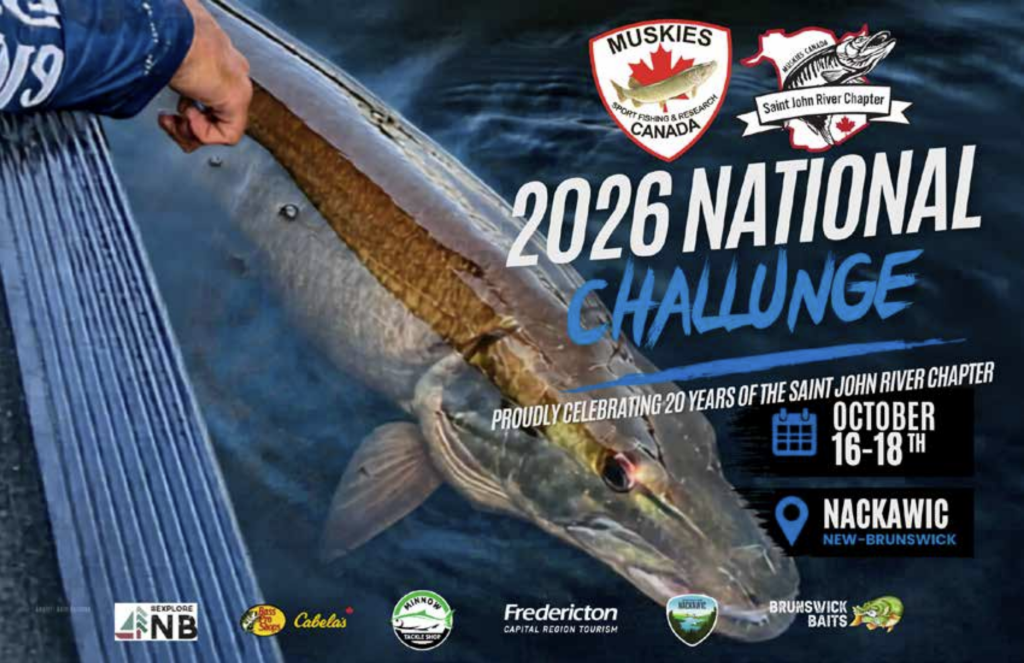
Join us for our BIG MUSKIE TOURNAMENT. If you’re looking to catch your new record for heaviest fish, you should come to New Brunswick and give the St. John River a try. Join us for our Fall international tournament, October 16-18. To make it even more fun, we will have an additional tournament, a TRIPLE CROWN, for muskie, striper, and sturgeon on the Lower St. John River out of Fredericton, New Brunswick October 15 and 16, leading up to the BIG MUSKIE TOURNAMENT.
2026 National Challunge