Early Season Soft Plastics for Muskie
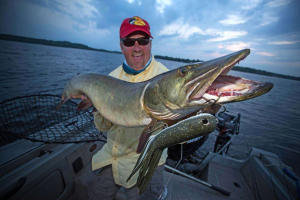
Mike Nabulsi
Mike Nabulsi is the owner of Waterwolf Lures and is one of the industry’s premier bait-makers. Check them out at https://bassmagnetlures-waterwolflures.com/
This article was originally published in the Release Journal of Summer 2023 (Vol.46 Issue 2)
Ontario’s early season here in FMZ 17 starts on the first Saturday of June. Surface water temperatures generally hover in the mid to upper 60’s during this time.
Fisheries Management Zone 17 covers the area east of Toronto to the Quinte Region. My favorite chain of lakes is in the Kawarthas, but I mainly fish Pigeon Lake because of its size and variety of f ish holding structure. Stocco and Moira Lake are local waters that I will fish for day trips. Although they both receive a decent amount of fishing pressure, those bodies of water continually offer some giant fish.
I have heard that the strains of musky in those lakes originate from the St. Lawrence River and are generally larger than those muskies found in the upper Kawartha Lakes region.
Early season opener can be difficult. As muskies have just finished spawning, they are often not very active depending on how the season has progressed. Finding emergent vegetation in shallow, warmer areas adjacent to deeper water is a great starting point. Once I connect with a fish or two, I’ll start to put together a rough plan of where to target fish throughout the day. I find that males will often remain shallower, and females will go deeper, laying on the first drop off or on deeper flats.
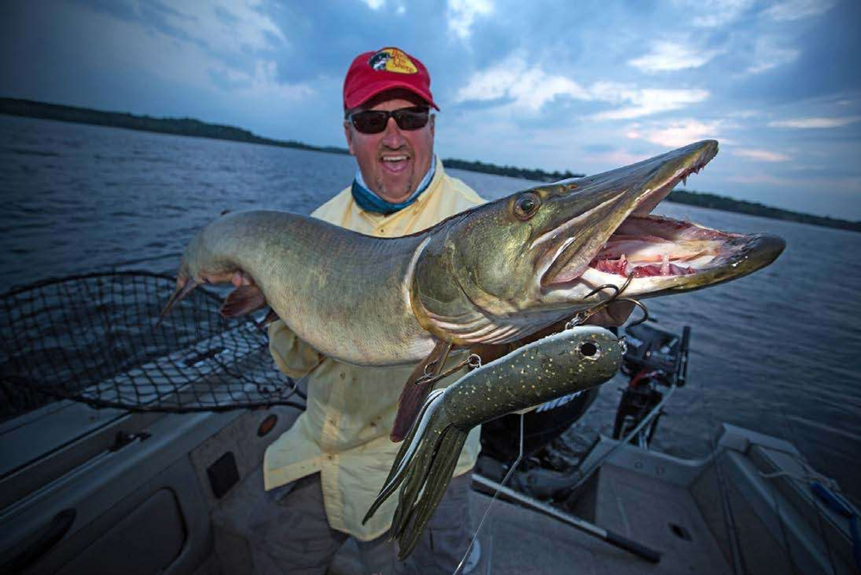
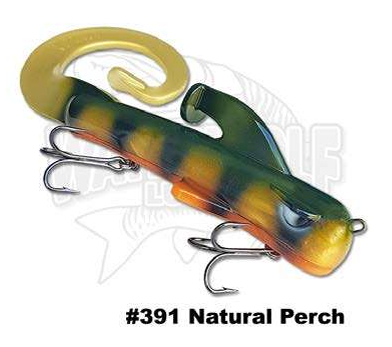
Generally, I try to fish as slowly as possible. Soft plastics, like 9” or 11” Water Wolf Gator Tubes and Ratzilla Juniors are a good starting point. I’ll have a variety of tubes rigged to fish in different depths. My Gator Tubes are mostly rigged with shallow castingharnesses to allow fishing over weed cover. I’ll retrieve the shallow rigged tube with two different methods, depending on the mood of the fish.
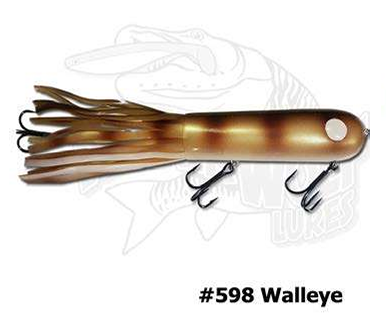
For more active fish, I use a side sweep or a pull-pause method. Switching from left to right will get the tube to move in different directions, which can work well if the muskies are willing to move.
Another method, taught to me by Simon Barth, owner of Lake Run Fishing, is to work the tube in a straight line like f ishing a Suick. Simon told me that retrieving in short rips with your rod tip in the water not only slows down the tube, but also the action you put on the rod. Muskies will often hit a bait that has next to no action other than a forward pausing action, and Gator Tubes are perfect for this method.
I’ll also use Gator Tubes and Ratzilla Juniors on drop-offs and over deeper f lats. Hang time is very important especially with tubes, and the longer it can stay suspended over cover or open water gives the fish more time to eat it on the pause. If fish are deeper or in a current area, I’ll rig Gator Tubes with a jig rig with a tail gunner rear spinner that’s set up to fish closer to the bottom. I find that a yo-yo type retrieve works well with a jig rigged tube and I’ll often burn the tube in towards the boat in the last third of the cast to trigger strikes.
“Finding emergent vegetation in shallow, warmer areas adjacent to deeper water is a great starting point”
For the season opener, I use a Shimano Tranx 400 spooled with 100 lb Power Pro braid on a St. Croix Legend Tournament Elite 8.5 or 9 foot heavy action for shallow rigged Gator Tubes. I find the St. Croix Legend Elite to be one of the most sensitive rods you can get for casting. This is an important feature, as the shallow casting tube bite can be very subtle and feeling that lure pick up can be just a slight tick at the end of your rod tip at times.
I’ll also have another Tranx 400 on a heavy action Chaos 20/20 9 foot rod set up for heavier tubes and Ratzillas. I find that the Chaos 20/20 Assault sticks have a slightly softer tip section and are well suited for casting and working those heavier soft plastics. In either case, a heavy action rod is important as it gives you the power to set the hook hard, breaking the grip that the fish has on the soft plastic bait.
Related Posts