I’ve been meaning to contribute to the Release Journal for some time now, but the last thing that I want to do nowadays is sit down in front of a computer. I’m much happier at my work bench, spending time outdoors, or in my boat… but after reading the latest Release Journal, I felt compelled to respond to Rob’s plea for contributions.
Also, it will allow me an opportunity to shake my finger and rant a bit at you muskie anglers for the way that you treat your reels, because well, that’s what old guys do. It’s an unwritten rule. So, my plan is to impart some accumulated knowledge, explanations and wisdom that should hopefully help you prolong the life of your reel, and prevent failure at the most inopportune time.
Today’s reels are not the reels that your father and grandfather fished with. Many of those reels were post war design, and made by ex-munitions or military factories. Zebco is a good example, as a popular and well-known company that migrated to making fishing reels. Contained in its name is the acronym for Zero Error Bomb Company.
It was a time when reels were simpler, and quality meant strength that was built to last. Today’s reels are far lighter, technologically more advanced and a whole lot more expensive. Yet many anglers treat them as disposable, not understanding the inner workings of their expensive gear, even though the reel is likely only a few years old and can cost in excess of $400. I find that lack of care hard to understand.
With proper maintenance and being armed with an understanding of the internal workings, you can adjust your fishing habits and keep that reel around for your lifetime. This is something I highly recommend, as most manufacturers are only providing parts support for 5 to 7 years now. After that, you rely on stock until that runs out, then you’re euchred. Your favourite reel can become a paperweight because a simple cheap internal part is no longer available. If your reel is maintained and fished within its designed capabilities, wear and tear and damage can be mitigated, which will extend the life of your reel.
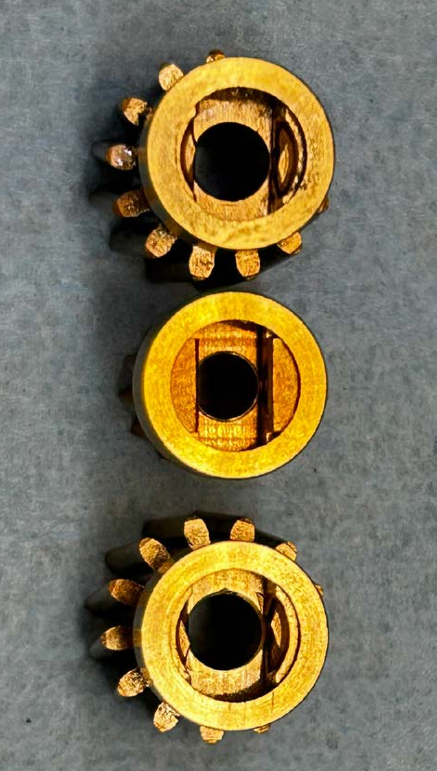
The part that I replace the most in both casting and trolling reels is the pinion gear. The pinion gear rides on the spool shaft. When you depress the thumb bar, push button or flip the clutch lever, you are lifting the pinion and disengaging it from the spool shaft. This allows the spool to spin freely when you cast, or are letting out line when setting up your trolling rig.
The pinion gear is still engaged with the main gear at this time, as both are locked down by your drag setting. It will take 8 to 10 plus pounds of force to get it moving again, depending on how tight you have your drag cranked down. Your stainlesssteel spool is spinning now like crazy. What you absolutely need to do is stop that spool rotation with your thumb prior to engaging the reel.
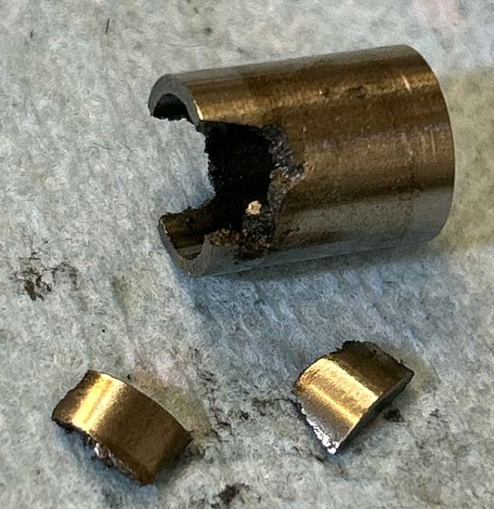
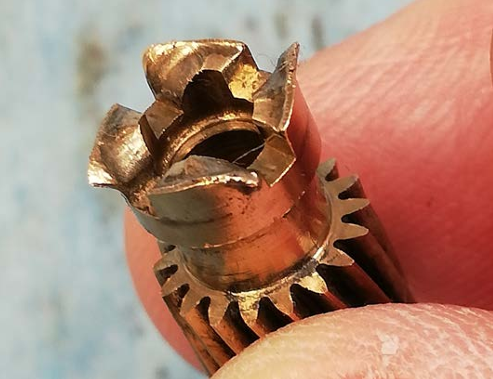
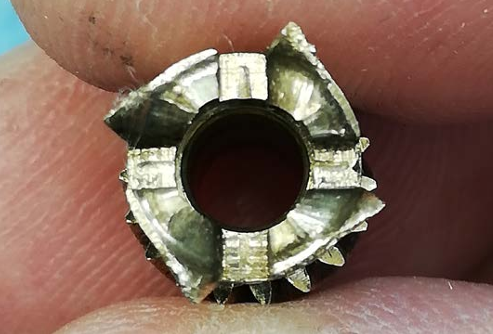
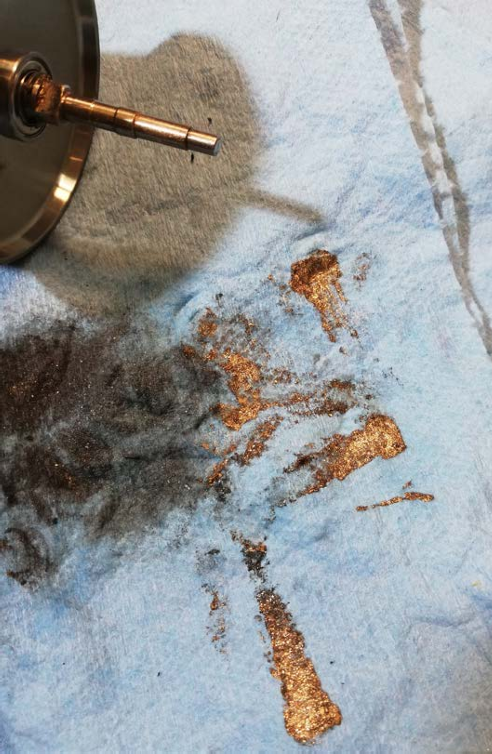
When you turn the handle, or flip the lever back to engage the reel, the clutch disengages and a couple of springs push the softer brass pinion back on to the much harder stainless steel spool shaft. If you do not stop the spool from spinning, it slams into the softer brass gear, going from a thousand RPM (or a bunch, anyway) to a dead stop, smashing its way into alignment with the recessed portions on the bottom of the pinion, causing it to wear down. You will eventually round it over to the point where it will skip when under pressure while reeling in a bait.
The pinion will ride up on the rounded edges and jump either 90 or 180 degrees and re-engage the spool depending on the cut of the pinion. Your reel handle will seem to skip or jump when reeling in under load. The pinion will also flare out, developing burrs that can get caught up in the tight tolerances of some pinion bearings, causing uneven wear on the pinion and main gear. The stress put on the pinion and main gear can end up giving you a rough feel, or “buzz” when reeling.
If your reel engages on the cast, which is unfortunately common with unbalanced power handles, it not only damages the pinion and potentially the main gear, it can also damage the gear shaft collar and bend or break the pin on the spool shaft that engages the base of the pinion. The spool shaft is the roller that engages the clutch bearing (Anti Reverse Bearing.)
So yes, I am shaking my finger at you… you know who you are. Remember:
STOP THE SPOOL FROM SPINNING BEFORE ENGAGING THE REEL.